
How Madison Increased Sewer Inspection Volume 130% and Eliminated Inspection Server Downtime
The City of Madison Engineering Division moved from legacy systems to a unified, AI-driven inspection platform, and helped shape the future of Risk & Rehab.
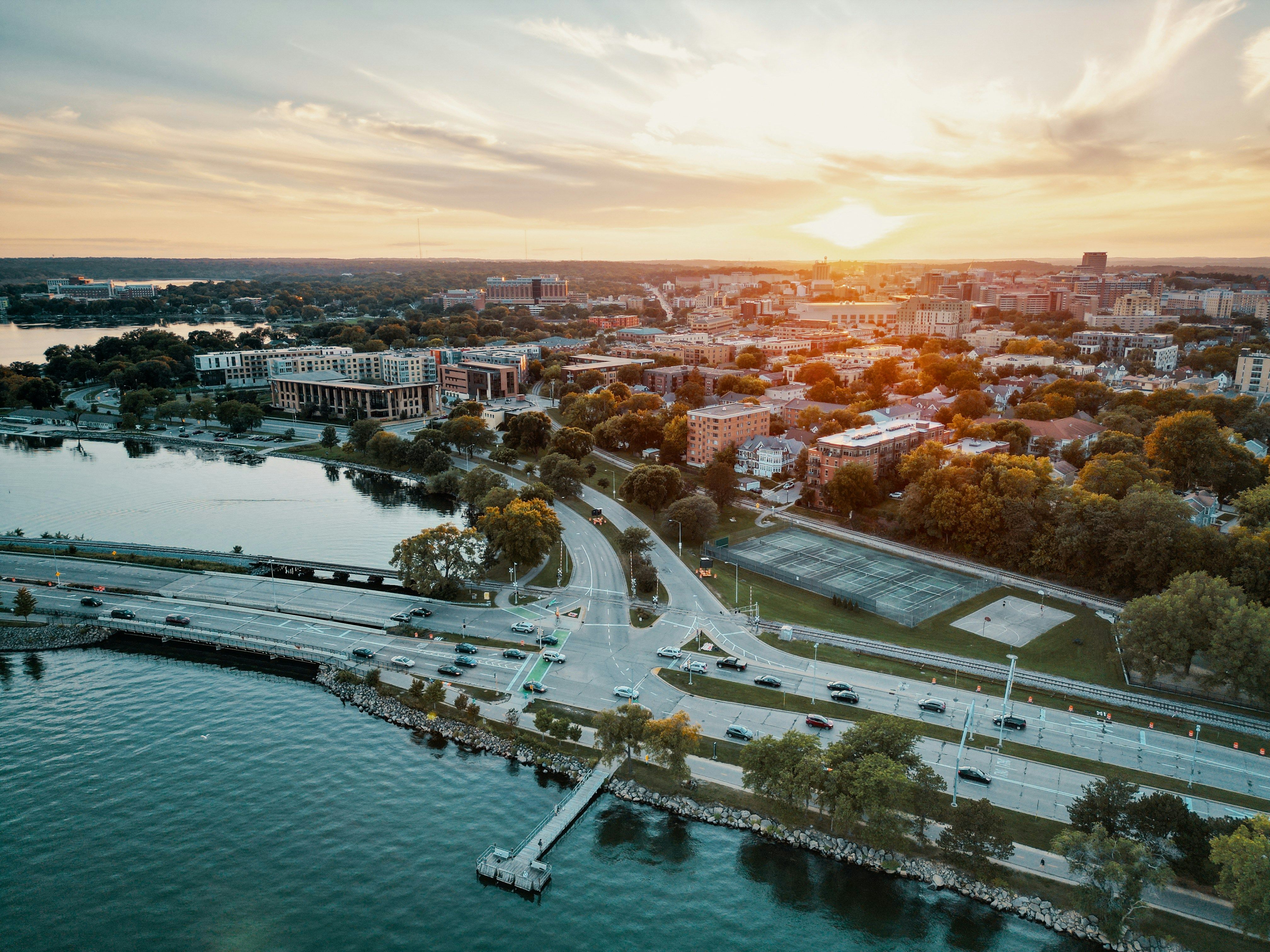
About the City of Madison
As the capital of Wisconsin, the City of Madison serves over 300,000 residents across a sewer system as varied as its history. The downtown core wraps around the State Capitol with infrastructure more than 100 years old; the outer edges of the city are still being built out with brand-new PVC, and two lakes sit in the middle of it all. Unlike many Midwestern cities, Madison's sanitary and storm systems are fully separated, meaning that when issues arise, the engineering team must make decisions across two interconnected networks at once.
The Engineering Operations team is more than 60 people strong: TV inspection crews, Vactor crews, construction crews, locating and lining contractors, plus the design engineers downtown. Jason Kelley, Public Works General Foreperson for CCTV and Trenchless Rehab, oversees the inspection program. He's been with the city since 2003, working his way up from laborer to Vactor operator to TV operator, a role he held for nearly 13 years, before stepping into program leadership.
The Challenge
When Jason started, the sewer department was still on VHS tape. Every inspection meant a video cassette and a foreperson reviewing footage by hand. Over the years, the team cycled through a series of on-prem inspection platforms looking for something better. None of them stuck.
"That was brutal," Jason recalls of those years. "It was always one thing after another. It wouldn't download to the office. The operators kept getting weird things on their end of the software." When the legacy on-prem server hit a snag, a TV truck could sit idle for 4 or 5 days while IT resolved it. Meanwhile, Jason was spending half his day in the TV bay trying to keep the workflow moving.
"I was spending probably four hours a day in the TV trucks, trying to get everything straightened out, so the videos would upload to the office without having to go back out and re-televise. That isn't something I should really be focusing on as a foreperson. There had to be an easier way, a better way, for everybody involved."
— Jason Kelley, Public Works General Foreperson, CCTV & Trenchless Rehab
The Solution
Madison's path to SewerAI began before the platform was their system of record. The team began by running AutoCode, SewerAI's automated NASSCO condition assessment engine, pushing roughly 20–30% of their footage through the AI-assisted coding engine just to keep up with inspection volume. The productivity gains were real, but running their legacy system in parallel with a modern approach created friction. Every inspection meant an export here, a reimport there, and a workflow that didn't quite belong to either platform.
When SewerAI's in-truck software came online, the consolidation made sense. Madison decided to retire their legacy tools entirely and run everything, capture, coding, and review, on a single platform. From AutoCode, the team expanded into in-truck inspection, MACP manhole inspections with 3D modeling, and a contractor direct-upload workflow that lets CIPP lining contractors push pre- and post-rehab video straight into Madison's account.
"As soon as the truck option came online, and we already had AutoCode, and we were doing more manual inspections and working with contractors, there were just too many options. It made it hard not to go with SewerAI."
— Jason Kelley, Public Works General Foreperson, CCTV & Trenchless Rehab
From AI-Assisted Inspection to AI-Assisted Planning
With capture, coding, and review consolidated, the next question for Madison was the one every utility asks: with this much condition data flowing in, where should the city actually spend its annual rehab budget?
That question is what made Madison one of SewerAI's earliest adopters of the Risk and Rehab engine. In fact, Madison had been in the room helping shape it, sitting in research and feedback sessions with SewerAI's product team, walking through how Madison engineers actually think about prioritizing pipe segments, and pressure-testing how the AI assistant bundles inspections into defensible capital projects.
In a February 2026 design session with SewerAI, Jason and his team talked through the criteria that should drive a project recommendation: pipe material, condition, depth, surface above, seasonal construction windows, resurfacing priorities, and how the model should sequence work that's already on the city's books before turning to uninspected assets.
"Madison is the kind of city that is always at the forefront of technology."
— Jason Kelley, Public Works General Foreperson, CCTV & Trenchless Rehab
For Madison, Risk and Rehab is the bridge from "we have great inspection data" to "we have a defensible, data-driven capital plan." It also reflects the level of partnership between Madison and SewerAI, with the Madison team playing an active role in shaping how the Risk and Rehab approach comes together.
Results
130% Jump in Inspection Volume
Over the last 90 days, the Madison team has seen inspection counts increase by 130 percent compared to the previous 90 days, with AutoCode now running on nearly half of all footage. Jason attributes the jump to workflow changes the platform has unlocked, and a new ability to see the city's network at a glance.
"I have been going in on a regular basis and looking at the Risk & Rehab map in Pioneer," he explains. "I look at what is not color-coded. That tells me we don't have any information on that asset yet." Through Madison's CMOM program, the team has been systematically working through every uncoded mile of the network, knocking out 40-inspection neighborhoods in a single week.
Catching Problems Before They Happen
One of the most distinctive parts of Madison's program is the use of inclinometer data to inspect new construction before water ever enters the pipe. By televising newly installed sewer mains during pre-acceptance, Madison can identify sags to a fraction of a percent and hold contractors accountable to fixing them before the city takes ownership.
Jason points to a 24-inch sewer main along a downtown bike path near the Kohl Center as the cautionary tale. Installed before the technology was available, the pipe now sits with a sag close to 90 percent of its diameter, trapping grease and debris and requiring a Vactor cleanout six times a year. With inclinometer pre-acceptance, Madison aims to prevent those liabilities at construction, not five years into the asset's life.
"If you can prevent the majority of the things on the front end and hold the contractors accountable, it's just gonna make life easier for everybody, and going back to being cost-efficient for the property owners and the taxpayers."
— Jason Kelley, Public Works General Foreperson, CCTV & Trenchless Rehab
Off the Server, Onto the Cloud
In the legacy on-prem era, server outages could keep a Madison TV truck down for four to five days while the team waited on IT. With SewerAI fully cloud-based, those outages disappeared.
"Now, with it all being cloud-based, there's no issue. It's easy to reference. We don't have to call IT. We don't have to deal with that."
— Jason Kelley, Public Works General Foreperson, CCTV & Trenchless Rehab
A Team That Embraced AI
When AutoCode was first introduced, Jason's TV operators had the same concerns most teams do when AI enters the picture. He addressed them directly: the AI isn't replacing the work, it's changing what the work focuses on.
"They're not gonna be losing their jobs, but their process is going to be changed a little bit, and for the better. They don't have to stop and look at every single crack, fracture, everything. The coding aspect is taken care of on the back end, not the front end. So that allows them to get more done, in a better time."
— Jason Kelley, Public Works General Foreperson, CCTV & Trenchless Rehab
A Partnership, Not Just a Product
For Jason, technology is only half the story. What's kept Madison expanding their footprint with SewerAI is the relationship.
"SewerAI for me has always been where you want to go. Their customer service is top-notch. You can get a hold of your contract person. Or if you're on your truck, you can use what I call your support bubble — they can just team viewer in, instead of you calling somebody, being on hold, and waiting. The technology isn't hard to learn. It's very intuitive."
— Jason Kelley, Public Works General Foreperson, CCTV & Trenchless Rehab
What's Next for Madison
Madison's three-to-five-year plan with SewerAI focuses on two goals: completing inspection coverage of every sanitary asset in the city, and fully operationalizing the Risk and Rehab model to inform design and capital budgeting.
When asked what he'd tell a peer foreperson in another mid-sized Midwest city, Jason has already taken those calls from Buffalo, Illinois, and Missouri, his answer comes without hesitation.
"You guys have done a really good job. The turnaround process for even main lines has been a fantastic night and day difference from when we first started."
— Jason Kelley, Public Works General Foreperson, CCTV & Trenchless Rehab, City of Madison